Be yourself; Everyone else is already taken.
— Oscar Wilde.
This is the first post on my new blog. I’m just getting this new blog going, so stay tuned for more. Subscribe below to get notified when I post new updates.
Be yourself; Everyone else is already taken.
— Oscar Wilde.
This is the first post on my new blog. I’m just getting this new blog going, so stay tuned for more. Subscribe below to get notified when I post new updates.
The dollar sign, AKA… The bottom line. How much does it cost? Is the financial risk worth the reward?
Realistically, advocating for policy change not only takes time, it costs money. To implement policy, thousands, hundreds of thousands, even millions of dollars are needed to successfully execute structured projects and proposals. For this reason, it is important that we discuss the cost of healthcare financing in regard to PPD.
Postpartum depression can be expensive to treat. But isn’t any disease, illness, disability, or complication? It may be more meaningful to look at the cost of not treating and understand what it would cost to not treat.
One group of researchers compared the associated costs of screening and treating to standard of care, not screening. What these researchers found was that screening and treating mothers with perinatal mood disorders resulted more healthy women in two years and was considerably less expensive than standard of care (Wilkinson, Anderson, & Wheeler, 2017). Another high-quality study evaluated the cost of mother-infant dyads who were untreated for PPD 5 years after giving birth from the year 2017. These researchers found that an estimated, collaborative cost is $14.2 billion for all untreated dyads (Luca, Garlow, Staatz, Margiotta, & Zivin, 2019). These results are of astronomical importance and suggest screening and treatment ought to be issued into practice at a much larger scale than what it is currently being done.
“While sustainability is an essential concept to ensure the future of humanity and the integrity of the resources and ecosystems on which we depend, identifying a comprehensive yet realistic way to assess and enhance sustainability may be one of the most difficult challenges of our time.”- Little, hester, & Carey, 2016
In order to enhance sustainability of screening and treating for PPD in community settings, healthcare professionals must remain involved in the process. Sustainability is enhanced when members are included in the design process and thoroughly understand the reasons behind why the process is being conducted and the benefits that are expected to result. You must obtain “buy-in”. It is an essential piece of ongoing success. This can be done through advocacy, campaigns, and spreading awareness via media outlets. Educating the community might possibly be the most pertinent piece of this puzzle. Those who understand reasoning behind their actions gain more ground and produce positive effects on a much larger scale than those who don’t.
References
Little, J. C., Hester, E. T., & Carey, C. C. (2016). Assessing and enhancing environmental sustainability: A conceptual review. Environmental Science & Technology, 50(13), 6830-6845. https://doi.org/10.1021/acs.est.6b00298
Luca, D. L., Garlow, N., Staatz, C., Margiotta, C., & Zivin, K. (2019). Societal costs of untreated perinatal mood and anxiety disorders in the United States. Mathematica Policy Research. Retrieved from https://www.mathematica.org/our-publications-and-findings/publications/societal-costs-of-untreated-perinatal-mood-and-anxiety-disorders-in-the-united-states
Wilkinson, A., Anderson, S., & Wheeler, S. B. (2017). Screening for and treating postpartum depression and psychosis: A cost-effectiveness analysis. Matern Child Health J., 21(4), 903-914. doi:10.1007/s10995-016-2192-9.

There has been much research to identify how to best manage and treat postpartum depression. In this day and age, technology advancements almost always play a role in how we provide this care. Nancy Byatt is a psychiatrist and the founding member of a program that was launched to help train healthcare providers to identify PPD symptoms and connect them with resources to answer questions related to treatment of these women (Chatterjee. 2020). Nancy created this program when she learned that providers were struggling with knowing how to care for women with PPD. This program is now a working model in the 21st Century Cures Act which was signed by President Obama to address a wide array of issues including, perinatal mental health.
It is technological advances such as this that are changing the trajectory of how we care for patients. Although technology may at times serve as a hindrance in certain regards, it can in fact greatly enhance the quality of care provided to patients seen every day.
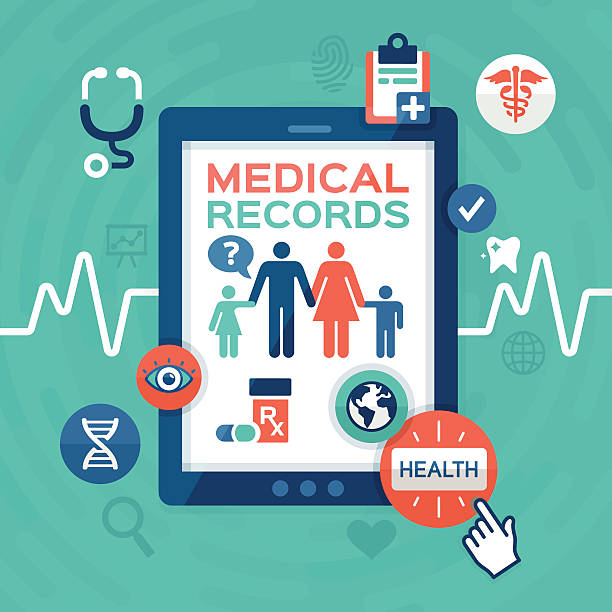
Electronic health records (EHRs) have been one of the greatest technological innovations in recent years and have done great things for protecting the data and privacy of mothers with perinatal mood disorders. Paper charts are high risk for getting lost, breached, or altered. EHRs minimize many of those risks by requiring a password and login to obtain access. Patient records in EHRs are also kept organized in one easy to retrieve place which eases workflow and therefore, the efficiency of care provided to these women. Many EHRs also allow the communication between provider and patient via a “patient portal”. Women can easily communicate concerns, questions, or updates easily which is comforting is many ways to these women.
A research study performed in 2015 looked at the mean depression scores pre and post intervention in a telephone-based support program for women with PPD (Milani, Azargashb, Beyrahgi, Defaie, & Asbaghi, 2015). The results from this study showed that women who received telephone-based support has noticeably smaller rates of depression than women who did not receive telephone support. This study proved that support offered through telephone has a positive effect on reducing PPD. It is studies like this that prove the positive effect of technology on enhancing maternal mood and mental health. It is important to follow research trends to stay current on evidence-based practices to provide best care and produce optimal outcomes for this population.
References
Chatterjee, R. (2020). Women’s mental health at key stages in life: A lifeline for doctors helps them treat postpartum depression. NPR. Retrieved from https://www.npr.org/sections/health-shots/2020/01/15/794943944/a-lifeline-for-doctors-helps-them-treat-postpartum-depression
Millani, H. S., Azargashb, E., Beyraghi, N., Defaie, S., & Asbaghi, T. (2015). Effect of telephone-based support on postpartum depression: A randomized controlled trial. Int J Fertil Steril, 9(2), 247-253. doi: 10.22074/ijfs.2015.4246
There are countless resources and information regarding innovation policy for postpartum depression (PPD) in the public sector. In order to take a closer look at policy advancements in the private sector, an in-depth literature review was performed. What was found was remarkable. The support for breastfeeding women in Arizona is overwhelming. Terra’s Place is an Arizona-based organization in the private sector that offers therapy support for mother’s suffering from perinatal mood disorders. A co-founder of Terra’s Place is Dr. Cara English who took part in creating an Arizona board of directors’ chapter for Postpartum Support International (PSI). The PSI organization has contributed in a big way to supporting policy for improving perinatal mood disorders.

Dr. Cara also has worked judiciously over the years to improve access to mental health services for mothers by working closely with healthcare providers to develop awareness in the community for this population (Terra’s Place, n.d.).
Arizona Breastfeeding Medicine and Wellness is another community wellness organization in the private sector that works closely with women who may be experiencing perinatal mood disorders or breastfeeding difficulties. Dr. Cara Riek, one of the founders, has provided safe care to many of these women by using evidence-based practices. I had the privilege of working closely with this organization to implement a quality-improvement project. Current evidence supports depression screening to quickly identify and treat women suffering from perinatal mood disorders. Evidence-based practice also encourages enhancing breastfeeding support and education to produce best outcomes for this population. Thus, the project included implementation of an endorsed depression screening tool and a comprehensive lactation support and education program.

“Federal efforts to preempt all state health privacy laws will likely be unsuccessful anytime in the foreseeable future. Rather, it would be more effective to focus energy and efforts on encouraging states to harmonize their own laws where appropriate and to develop technology to accommodate differences where they continue to exist.”- Pritts, 2007
Policy development relies on advocacy from community supporters and data that shows the benefits of using evidence-based practices. Implementation of quality-improvement projects is a perfect way to initiate policy change in the community and make impactful change in the community.
This video shows Lisa Abramson discuss her experience with PPD and is an example of how important this issue is.
References
Arizona Breastfeeding Medicine and Wellness. (2020). Our history. Retrieved from http://bfmedaz.com/about/
Pritts, J. L. (2007). Federal efforts to impose uniformity on state health information privacy laws. 20-23. Retrieved from https://asu.instructure.com/courses/37263/files/10302120?module_item_id=2344369
TEDx Talks. [Lisa Abramson talks about postpartum depression and psychosis—and her own descent into]. (2015, November 9). Let’s talk about postpartum depression . Retrieved from https://www.youtube.com/watch?v=6glBDRZUAM0
Terra’s Place. (n.d.). About us: Meet the terra’s place team. Retrieved from https://terrasplaceaz.com/about/
Spreading awareness on the importance of identifying and managing postpartum depression (PPD) has a long way to come in the United States. Currently, no federal policies exist that require PPD screening (PSI, 2019). However, because of continued support from major health organizations and community activists, this may soon change. Individual states have made efforts to involve state legislation, promote awareness, and form task forces. This is a start and may urge lawmakers to act at a quicker pace. Recently, the state of Arizona declared May 2nd, 2018 as Maternal Mental Health Day (2020 Mom,2020). This was the result of collaboration and advocacy to promote awareness for maternal mental health.

The National Coalition for Maternal Mental Health has developed Mom Congress which is a day where mothers and supportive individuals gather every May in Washington DC to advocate, support, and sponsor federal legislative efforts. Some of the main issues that attendees rallied for in 2018 was paid leave for families, the review of state suicide rates by maternal mortality examination committees, and funding for the Bringing Postpartum Depression out of the Shadow Act (2020 Mom,2020).
Active legislative efforts continue to push for funding, resources, and support for mothers suffering from PPD. There are numerous newly introduced bills to reflect this.
These efforts have led to passed legislation of several bills including:
S.1112- Maternal Health Accountability Act of 2017. Sen. H. Heitkamp[D-ND]/H.R.1318- Preventing Maternal Deaths Act of 2017.Rep.J.Herrera Beutler [R-WA-3]
Signed into law on December 21st, 2018. This bill allows grants to be made by the Department of Health and Human Services (HHS) to states for the benefit of maternal mental health.
H.R.315/S.783-Improving Access to Maternity Care Act.Rep.M.C.Burgess[R-TX-26]/Sen.T.Baldwin[D-WI]
This care act amends the Public Health Service Act and mandates the Health Resources and Services Administration (HRSA)to recognize, collect, and release data regarding the need for maternal health services in areas where there is a shortage of health professionals.
H.R.34-21st Century Cures Act.Bringing Postpartum Depression Out of the Sadows Act.Rep.K.Clark[D-MA-5]
Signed into law on December 13th, 2016, this law requires the release of federal grants to states to build and maintain educational mental health programs, screening, and treatment for mothers with PPD.
(March for Moms, 2019).
These types of federal legislative Acts and interventions have a tremendous impact and positive effect on individuals AND communities as a whole (Longest, 2010). It is time to acknowledge mental health as a priority. Reject associated social stigmas. Give voice to and lift up those that can’t life up themselves. A strengthened community is one that respects and supports every person in it.
References:
2020 Mom. (2020). Closing gaps in maternal mental health care through education,collaboration, and advocacy: AZ policy. Retrieved from https://www.2020mom.org/az-policy
Longest, B. B. Jr. (2010). Health policymaking in the united states (5th ed.). Chicago, IL: Health Administration Press.
March for Moms. (2019). Federal legislations. Retrieved from https://marchformoms.org/advocacy/federal-legislation/
Postpartum Support International. (2020). Legislation: U.S. national legislative action. Retrieved from https://www.postpartum.net/professionals/legislation/

The MOTHERS ACT was originally created to provide appropriate support, research, diagnosis, and treatment to women suffering with PPD. This Act was written into the construct of the Patient Protection and Affordable Care Act which passed in 2010.
“Patient Protection and Affordable Care Act (ACA), Section 2952: Support, Education, and Research for Postpartum Depression mandated ongoing research to better understand the frequency and course of postpartum depression, address differences in treatments needs among racial and ethnic groups, and develop culturally competent evidence-based treatment approaches (U.S. Department of Labor, 2012)”-Postpartum Support International
Unfortunately, no funds have been granted by Congress to implement the undertakings mentioned above (PSI, 2020). All following legislative action was initiated on a state by state basis. It wasn’t until the Bringing Postpartum Depression Out of the Shadows Act of 2015[H.R. 3235] that this changed. This Act authorizes grants to be made to individual states to build and expand upon programs that aid screening and treatment efforts for PPD. This change is the product of many hard-working advocates that have a passion for the wellness of women and children.

Many people have the ability to change, create, or influence policy. I recently had the privilege of interviewing one of these people who opened up about her experiences serving women and children affected by PPD. This individual wished to remain anonymous and so for the purposes of this blog, I will refer to this person as “Influencer”.
When asked,
“You have worked with vulnerable women and children who have suffered from social determinants of health. With your experience, how do you feel postpartum depression is affected by unequal access to health care and lack of social support?”,
Influencer responded:
“Often, women seclude themselves and are ashamed of their experience. This barrier is hard to overcome because denial and confusion is what most of these women with PPD are experiencing. Confusion, because they do not understand why they are feeling this way. Denial, because they feel like they should be feeing pure bliss, and not resentment. They often feel guilty about the resentment they feel for the child. The unequal access to healthcare means women are left alone to deal with these emotions, not seeking out help from family or peers, much less healthcare (if they even have healthcare).”
What a powerful response. This made me really sit back and ponder health disparities that many of these women and children face every day. This response inspired me to ask the question,
“Creating a culture of equality is the goal for many health activists. In your opinion, how can we encourage and influence members of our community to participate in policy development?”
To which Influencer responded,
“First, we have to acknowledge that we will never be able to offer equality. If we are truly seeking a just goal, we need to demand a goal of equity. We need to understand that there are historic and systematic barriers which disproportionately affect people of color, whom then typically end up being these “vulnerable” populations, as then we are the populations with the biggest health disparities.”
Influencer continued by explaining that if we want to encourage and influence members of our community to participate in policy, we must first ask:
Who are these members of the community which we are asking to participate? Are they the community that is most affected? They need to be the ones at the center of the table
References
Postpartum Support International. (2020). Legislation. Retrieved from https://www.postpartum.net/professionals/legislation/
2020 Mom. (2020). Policy positions & papers. Retrieved from https://www.2020mom.org/policy
The goal of this policy blog is to increase awareness of postpartum depression (PPD) in our community to address the gap in PPD screening and treatment. Lack of maternal follow up after birth and inadequate screening to detect PPD can lead to poor health outcomes for maternal-infant dyads and must urgently be addressed. Postpartum Support International (PSI) believe a main source of this issue is healthcare provider’s busy schedule which leaves them feeling rushed and ultimately, forced to place PPD screening as a low priority task. It is recommended by PSI that providers still prioritize PPD screening and find a way to integrate this important measure into standard of care.
Healthcare policy exists for the sole purpose of enhancing wellness of all people (Longest, 2010). Fortunately, policy is largely influenced by community activists. This is why it is critical to ensure members of our community are educated and informed on what PPD is and its effects, should screening and treatment persist as a non-priority. If healthcare policy does not serve in favor to address the lack of screening and treatment available for those suffering from PPD, health of the population is threatened. This is where ethical concerns arise. Ethically, if it has been proven that PPD leads to poor health outcomes, every attempt by the government to resist PPD should be issued.
“Ethical considerations help guide the development of new policies by contributing to definitions of problems and the structure of policy solutions”- Beaufort B. Longest, Jr.
The federal government is able to influence population health through community health efforts (Cornell, 2018). For example, government funding for screening and paid educational offerings for the community can lead to early identification and treatment of PPD. Incentives for healthcare providers to perform screening for PPD with regular follow up and treatment may be one of the most efficient ways to address this health disparity. This type of funding and support from the government can only happen if elected officials are made aware of the problem. How can we make elected officials aware of the problem? Come forward. Be brave. Share personal stories and join activist groups. Great changes come from motivated, resilient people who wish to make a difference. When we consider the ethical issue of not addressing maternal mental health, we also must consider the impact of social injustice that will ensue because nothing was done. Caring for one another enough to stand up for change is a true act of love and can be the catapult that helps create a true nation of equality.
References
Cornell, A. S. (2018). Health policy: Resources for congressional staff. Congressional Research Service, 1-22. Retrieved from http://www.crs.gov/Reports/R43889?source=search&guid=13480fb7e56049569a13b1f4d5cdd6ff&index=0
Longest, B. B. Jr. (2010). Health policymaking in the united states (5th ed.). Chicago, IL: Health Administration Press.
Postpartum Support International (2020). Screening recommendations. Retrieved from https://www.postpartum.net/professionals/screening/
Postpartum Depression (PPD) is a disorder associated with feelings of unrelieved, severe sadness that women may experience after childbirth. Unlike baby blues, where similar symptoms can last up to two weeks, PPD runs a much longer course and can extend up to a year after giving birth (Center for Disease Control and Prevention, 2018). During this extended length of time that a mother is experiencing PPD without treatment, severity of symptoms can worsen and place the mother and her child at great risk. This level of impact ought to catch the attention of healthcare professionals and prompt their efforts to collaborate with policy makers to maximize the health and wellness of this population.
Arizona’s Legislature has shown efforts in the most recent years to advocate for women suffering from perinatal mood disorders. Heather Carter, a champion representative for this subject matter along with the Arizona Department of Health Services conducted a press conference in 2018 that addressed maternal mental health at the state capitol (2020 Mom, 2020). https://homeppd.home.blog/wp-content/uploads/2020/01/f9d23-hcr2038p.pdf
At this press conference May 2nd, 2018 was officially proclaimed as Arizona’s mental health day. The collaborative efforts among community leaders at this press conference was a huge step forward for mother-infant dyads and their wellbeing. Continued efforts to aid in the development of healthy mother-infant dyads ought to be encouraged at all levels of policy growth.
As stated by Beaufort B. and Longest, Jr., “The leaders of an organization or group must be able to accurately analyze the public policy environment of their entity” (2010). As healthcare leaders, doctorly-prepared advanced practice nurses must rise to this expectation and remain actively involved in all aspects of policy development in their respective fields.
“The leaders of an organization or group must be able to accurately analyze the public policy environment of their entity”-Beaufort B. & Longest, Jr.
The United States Department of Health and Human Services (USPSTF) has released a recommendation that is evidence-based to screen for PPD with appropriate treatment and follow-up (U.S. Preventive Services Task Force, 2016). However, healthcare providers are not being held accountable for screening which is leading to inadequate attention and treatment of mothers suffering from PPD. Fortunately, A bill was recently signed by President Trump which will fund a task force of agencies to tackle the issue of maternal mental health. The product of this collaborative effort will be divulged in a congressional report in June of 2020 (2020 Mom, 2020). The expected result of this work will give direction to mental health facilities of how to appropriately address, treat, and manage the PPD population and highlight the imperativeness of its’ execution.
References:
2020 Mom, (2020). Closing gaps in maternal mental health care through education, collaboration, and advocacy: 2019 Legislation Overview. Retrieved from https://www.2020mom.org/federal-legislation
Center for Disease Control and Prevention. (2018). Depression during and after pregnancy. U.S. Department of Health & Human Services. Retrieved from https://www.cdc.gov/features/maternal-depression/index.html
Longest, Jr. & Beaufort, B. (2010). Health policymaking in the united states (5th ed.). Chicago, IL: Health Administration Press.
United States Preventive Services Task Force, (2016). Final recommendation statement: Depression in adults: screening. Retrieved from https://www.uspreventiveservicestaskforce.org/Page/Document/RecommendationStatementFinal/depression-in-adults-screening1
This is an example post, originally published as part of Blogging University. Enroll in one of our ten programs, and start your blog right.
You’re going to publish a post today. Don’t worry about how your blog looks. Don’t worry if you haven’t given it a name yet, or you’re feeling overwhelmed. Just click the “New Post” button, and tell us why you’re here.
Why do this?
The post can be short or long, a personal intro to your life or a bloggy mission statement, a manifesto for the future or a simple outline of your the types of things you hope to publish.
To help you get started, here are a few questions:
You’re not locked into any of this; one of the wonderful things about blogs is how they constantly evolve as we learn, grow, and interact with one another — but it’s good to know where and why you started, and articulating your goals may just give you a few other post ideas.
Can’t think how to get started? Just write the first thing that pops into your head. Anne Lamott, author of a book on writing we love, says that you need to give yourself permission to write a “crappy first draft”. Anne makes a great point — just start writing, and worry about editing it later.
When you’re ready to publish, give your post three to five tags that describe your blog’s focus — writing, photography, fiction, parenting, food, cars, movies, sports, whatever. These tags will help others who care about your topics find you in the Reader. Make sure one of the tags is “zerotohero,” so other new bloggers can find you, too.
Have a WordPress.com account? Log in now.


